

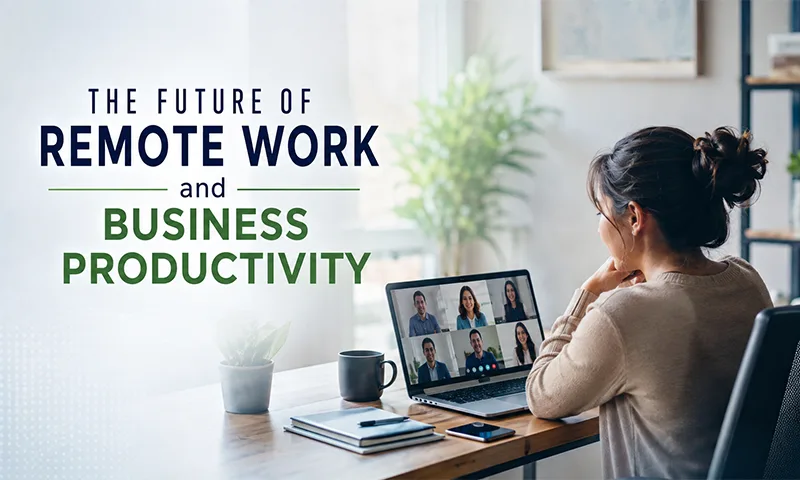
Future of Remote Work
Remote Work Is Becoming a Permanent Business Model
The future of remote work is no longer about simply allowing employees to work from home occasionally. Businesses are increasingly building flexible work models that combine remote, hybrid, and office-based collaboration. As digital tools become more powerful, organizations can connect employees across cities and countries without requiring everyone to work from the same physical location. This shift gives businesses access to a wider talent pool while giving employees greater flexibility in managing their professional and personal responsibilities.
Technology Is Driving the Remote Work Revolution
Technology sits at the heart of modern remote work and business productivity. Cloud platforms, video conferencing applications, project management software, instant messaging, and artificial intelligence allow teams to communicate and collaborate from almost anywhere. Employees can access documents, share ideas, manage projects, and complete important tasks without being physically present in an office. As technology continues to develop, remote teams are likely to become even more connected, efficient, and responsive.
Artificial Intelligence Will Transform Remote Productivity
Artificial intelligence is expected to play an important role in the next generation of remote work. AI-powered tools can automate repetitive administrative activities, organize information, summarize meetings, assist with writing, analyze data, and help employees prioritize their workloads. Instead of replacing every human task, AI can increasingly act as a productivity assistant that allows professionals to spend more time on creative thinking, decision-making, and problem-solving. Businesses that use AI responsibly may gain a significant advantage in managing distributed teams.
Flexible Work Can Improve Employee Productivity
One of the strongest advantages of remote work is the flexibility it provides employees. People can often organize their schedules around periods when they are most productive, provided business requirements are met. Removing daily commuting can also save valuable time and reduce some of the fatigue associated with long journeys. When employees have a comfortable working environment and clear expectations, flexible work arrangements can contribute to stronger concentration, better work-life balance, and improved job satisfaction.
Communication Will Become More Intentional
Remote teams cannot depend on spontaneous office conversations in the same way traditional teams can. As a result, effective communication will become even more important. Businesses will need clear communication policies that define when employees should use email, messaging platforms, video meetings, or project management systems. Well-organized communication reduces confusion and prevents employees from spending excessive amounts of time in unnecessary meetings. The future workplace will focus less on constant communication and more on meaningful communication.
Hybrid Work Will Remain an Important Option
Although fully remote organizations will continue to exist, hybrid work is likely to remain an important model for many businesses. Hybrid arrangements allow employees to work remotely while maintaining opportunities for face-to-face collaboration. Physical meetings can be particularly valuable for brainstorming, team building, training, and strategic discussions. The challenge will be creating a fair system in which remote employees receive the same access to information, opportunities, and recognition as employees who regularly work from an office.
Measuring Results Instead of Hours
The traditional workplace often associates productivity with time spent at a desk. Remote work encourages organizations to reconsider this approach. The future of business productivity will increasingly focus on outcomes rather than hours. Companies can evaluate employees based on completed projects, quality of work, customer satisfaction, deadlines, and measurable business results. This approach can create greater trust and encourage employees to focus on meaningful contributions rather than simply appearing busy.
Cybersecurity Will Become More Important
As more employees work outside traditional offices, businesses must pay greater attention to remote work cybersecurity. Employees may connect through home networks, personal devices, or public internet connections, creating additional security considerations. Organizations will need strong passwords, multi-factor authentication, secure cloud systems, device management, regular software updates, and employee cybersecurity training. Protecting company information will become a shared responsibility between technology teams and individual employees.
Company Culture Must Adapt to Remote Teams
A strong company culture cannot depend entirely on physical offices. Businesses with remote employees need deliberate ways to maintain employee engagement and workplace culture. Virtual team meetings, informal conversations, recognition programs, online events, and regular one-to-one discussions can help employees feel connected. Managers also need to understand that remote employees may experience isolation if communication becomes purely task-focused. Building relationships remains essential even when colleagues rarely meet face to face.
Remote Leadership Will Require New Skills
Managing a distributed workforce requires a different leadership approach. Remote managers need to communicate expectations clearly, provide regular feedback, trust their employees, and recognize achievements. Micromanagement can quickly damage morale when employees are working remotely. Instead, successful leaders will focus on trust, accountability, communication, and measurable outcomes. They will also need to recognize signs of disengagement and support employees before small problems become major performance issues.
Employee Well-Being Will Shape Remote Work Success
Remote work offers flexibility, but it can also blur the boundary between professional and personal life. Employees may feel pressure to remain available beyond normal working hours. Future organizations will need to establish healthier expectations around digital boundaries and employee well-being. Encouraging breaks, respecting working hours, promoting reasonable workloads, and supporting time away from screens can help employees maintain sustainable performance over the long term.
Global Talent Will Become More Accessible
One of the biggest changes created by remote work is the ability to hire talent beyond traditional geographic boundaries. Businesses can potentially recruit specialists from different cities, regions, and countries without requiring relocation. This can help organizations access specialized skills that may not be available locally. At the same time, companies will need to understand differences in time zones, communication styles, employment regulations, and workplace expectations when managing international teams.
Remote Work Will Encourage Better Business Processes
Remote working can expose inefficient processes that were previously hidden by physical proximity. When employees cannot simply walk to another desk to solve a problem, organizations are encouraged to document processes, clarify responsibilities, and centralize information. This can lead to better workflows and stronger operational efficiency. Businesses that use remote work as an opportunity to redesign inefficient processes may become more agile and scalable.
The Future Workplace Will Be More Employee-Centric
The workplace of the future is likely to offer employees greater choice in how and where they work. Rather than following one rigid model, organizations may provide different options depending on job responsibilities, team requirements, and employee preferences. This employee-centric approach can help companies attract and retain skilled professionals. However, flexibility will need to be balanced with collaboration, customer needs, organizational goals, and security requirements.
Remote Work Will Reward Businesses That Adapt
The future of remote work will not be determined by technology alone. Businesses will need to rethink leadership, communication, employee engagement, cybersecurity, performance measurement, and organizational culture. Companies that simply move traditional office processes online may struggle to achieve the full benefits of remote work. Organizations that redesign their working methods around flexibility, trust, technology, and measurable outcomes will be better positioned for long-term success.
Conclusion: Building a More Productive Future of Work
The future of remote work and business productivity is moving toward a more flexible, technology-driven, and outcome-focused workplace. Remote and hybrid models can help businesses access global talent, reduce unnecessary limitations, and give employees greater control over how they work. At the same time, success requires strong communication, cybersecurity, leadership, employee well-being, and a culture based on trust. As artificial intelligence and digital collaboration tools continue to evolve, businesses that embrace thoughtful flexibility rather than simply following workplace trends will be better prepared to create productive, resilient, and human-centered organizations.
