

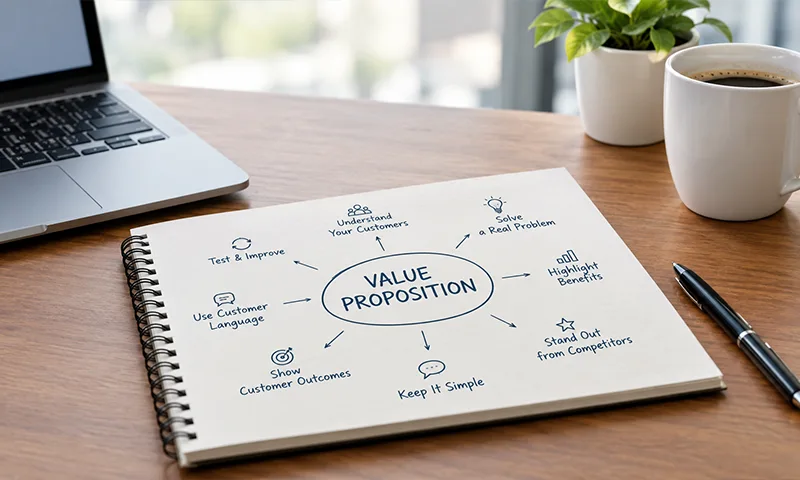
Strong Business Value Proposition
A business value proposition is a clear statement that explains why customers should choose your product or service over other available options. It connects what your business offers with what your target audience actually needs. A strong value proposition does more than describe a product—it communicates the specific value, benefits, and results customers can expect.
Why a Strong Value Proposition Matters
Customers have more choices than ever, and they often make decisions quickly. If your business cannot clearly communicate its value, potential customers may simply move on. A well-developed value proposition helps businesses stand out, build trust, and make their offerings easier to understand. It can also improve marketing communication because the same core message can guide your website, advertising, sales presentations, and social media content.
Start by Understanding Your Target Customer
The first step in creating a strong business value proposition is understanding who you are trying to serve. Think beyond basic demographics and identify your customers’ goals, challenges, frustrations, and expectations. Ask yourself what problem they are trying to solve and what outcome they consider valuable. When you understand the customer’s perspective, your value proposition becomes more relevant and meaningful.
Identify the Problem Your Business Solves
Every successful product or service addresses a need. Your value proposition should make that need obvious. Instead of simply saying that your company provides professional services, explain the problem those services solve. For example, a business might help small companies save time, reduce operational complexity, improve productivity, or reach more customers. The clearer the problem, the easier it becomes to communicate your value.
Focus on Benefits Instead of Features
One common mistake businesses make is focusing too heavily on product features. Features tell customers what something has, while benefits explain how it improves their lives or businesses. A software company, for example, may promote automated reporting as a feature. A stronger message could explain that automated reporting helps managers save hours every week and make faster decisions. Customers usually care more about outcomes than technical specifications.
Explain What Makes Your Business Different
A strong business value proposition should answer an important question: why should customers choose you? Look at your competitors and identify what genuinely makes your business different. It could be faster service, better customer support, specialized expertise, greater convenience, flexible pricing, superior quality, or a unique approach. The difference should be meaningful to customers rather than simply sounding impressive.
Keep the Message Clear and Simple
Your value proposition does not need complicated language or industry jargon. In fact, simplicity often makes it more powerful. A customer should be able to understand your main promise within a few seconds. Use clear, direct, customer-focused language and avoid vague statements such as “we deliver innovative solutions” unless you explain what that innovation actually means for the customer.
Make Your Value Proposition Specific
Specificity creates credibility. Instead of saying that your company provides “excellent service,” explain what excellent service means. Perhaps you offer same-day support, customized solutions, transparent pricing, or dedicated account management. Specific details give customers a clearer reason to trust your business and help your message become more memorable.
Connect Your Value Proposition With Customer Outcomes
Customers are ultimately interested in results. Your value proposition should therefore connect your offering with a desired outcome. Consider phrases such as saving time, reducing costs, increasing efficiency, improving customer experience, generating more leads, or simplifying daily operations. The exact outcome will depend on your industry, but the principle remains the same: show customers what changes after they choose your business.
Use Customer Language in Your Messaging
The strongest value propositions often sound like something a customer would naturally say. Pay attention to customer reviews, support questions, sales conversations, surveys, and online discussions. These sources can reveal the words people actually use to describe their problems and goals. Incorporating this language into your messaging can make your value proposition feel more authentic and relatable.
Test and Improve Your Value Proposition
A value proposition should not be treated as a permanent statement. Markets change, customer expectations evolve, and competitors introduce new offerings. Test different versions of your message through website headlines, advertisements, email campaigns, or sales conversations. Monitor which messages generate stronger engagement and inquiries, then refine your wording based on real customer responses.
Put Your Value Proposition Into Action
Once you have created a strong value proposition, make sure it appears consistently across your customer journey. Your website homepage, landing pages, brochures, presentations, social media profiles, and sales materials should communicate the same central promise. Consistency helps customers quickly understand what your business offers and why it matters.
Conclusion
Creating a strong business value proposition starts with understanding your customers and the problems they need to solve. From there, businesses can communicate meaningful benefits, highlight genuine differences, use simple language, and focus on measurable customer outcomes. A powerful value proposition is not simply a catchy marketing sentence—it is a clear promise of value. When that promise is relevant, specific, credible, and consistently communicated, it can help a business attract the right customers and build stronger long-term relationships.
